Bloopi app
Bloopi App
Bridging the gap between field volunteers and B2B impact traceability.
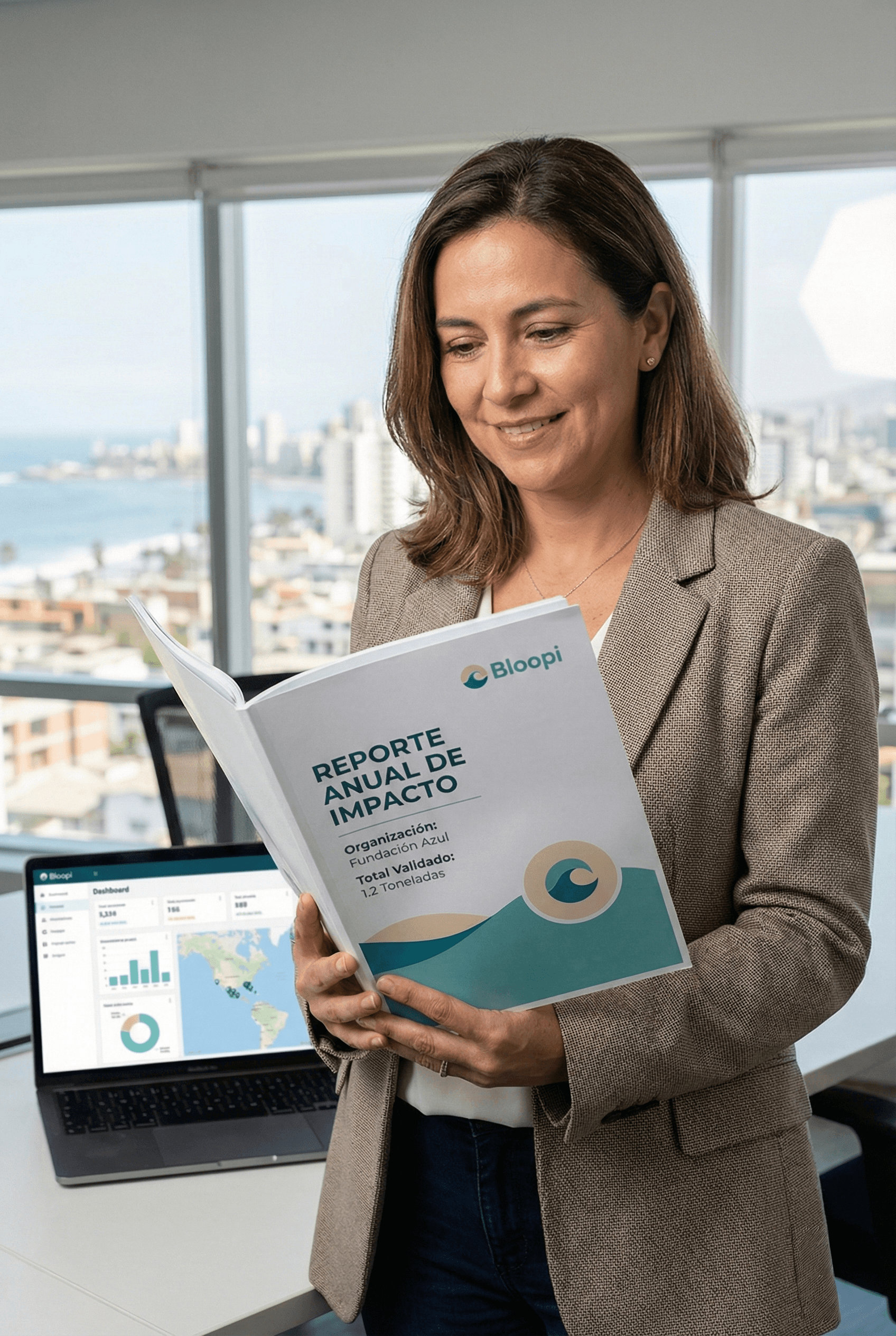
I architected a mobile ecosystem to digitize manual environmental cleanups.
By leveraging behavioral design (the Hook Model), the app drives volunteer retention through gamification while generating verifiable, real-time data for NGOs and corporate sponsors.
It transforms offline, sporadic efforts into a scalable, data-driven operation.
Role
Product Designer (End-to-End)
Timeline
4 meses (2024)
Industry
Startup / Greentech / B2B
Platform
iOS & Android App
Stack
Figma, Notion, LLMs
Context: Uniting a fragmented ecosystem
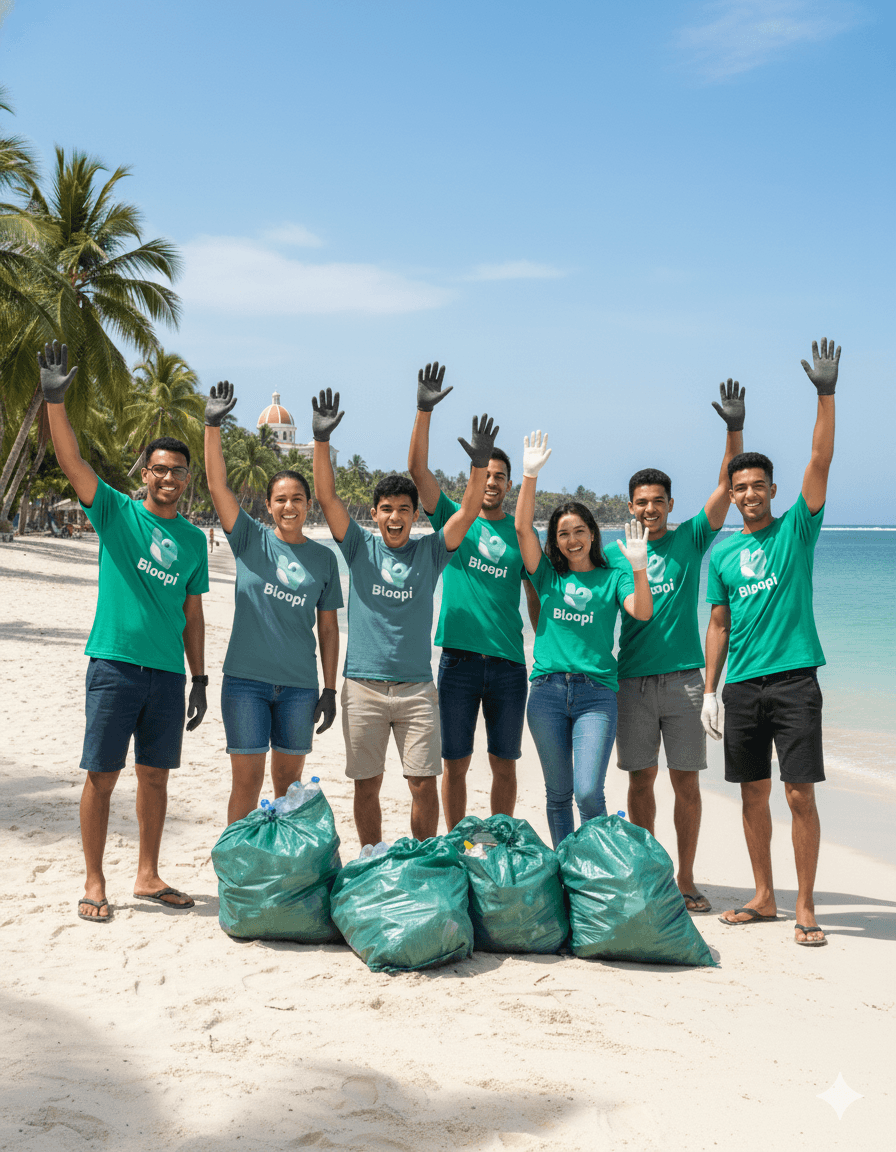
Living in Santa Marta, Colombia, I witnessed firsthand the impact of land-based waste on marine biodiversity. However, I quickly realized the root problem wasn't a lack of community intention—there were already many isolated cleanup initiatives—but a systemic lack of cohesion.
I designed Bloopi to be the digital infrastructure that bridges this gap. The goal was to transform sporadic, individual efforts into a scalable, data-driven operation, turning environmental goodwill into actionable and trackable metrics.
The Challenge: The intention-action gap
Research shows that 80% of people want to act sustainably, yet under 5% take consistent action. The bottleneck isn't a lack of awareness; it's the high cost of friction.
My challenge was to architect a product ecosystem that bridges this gap, drastically reducing the cognitive load between the "intention to act" and the physical execution.
The Barriers: Why do users churn before taking action?
Discovery Friction
Fragmented event data across social networks forced users to over-investigate.
This high cognitive load killed initial motivation before the user even left their house.
Lack of Social Trust
Users hesitated to attend physical events alone.
The absence of a verified community network was identified as the #1 drop-off point in the user journey.
Zero Impact Traceability
Without immediate, verifiable feedback, the physical effort felt empty.
The lack of a digital reward loop prevented long-term user retention.
Architecture: Mapping the habit loop
Before pushing a single pixel, I needed to untangle the physical logistics of a cleanup event.
I mapped the user journey to identify exactly where the "drop-offs" happened. The architecture of the app was built around a core Hook Model:
Trigger (push notification), Action (1-tap offline QR scanning), Variable Reward (instant digital impact points), and Investment (climbing the community leaderboard).
The Solution: Engineering the habit
To break the initial friction, I designed an ecosystem based on the Hook Model, transforming physical labor into digital rewards and actionable data.
Dynamic Social Proof
Notifications aren't generic alerts; they are peer invitations.
Leveraging social accountability creates a safety circle that significantly reduces event drop-off rates.
Context-Aware Ergonomics
Designed for the field. I implemented high-contrast interfaces for direct sunlight, large touch targets for gloves, and an offline-first mode that securely caches data without a signal.
Immediate Validation
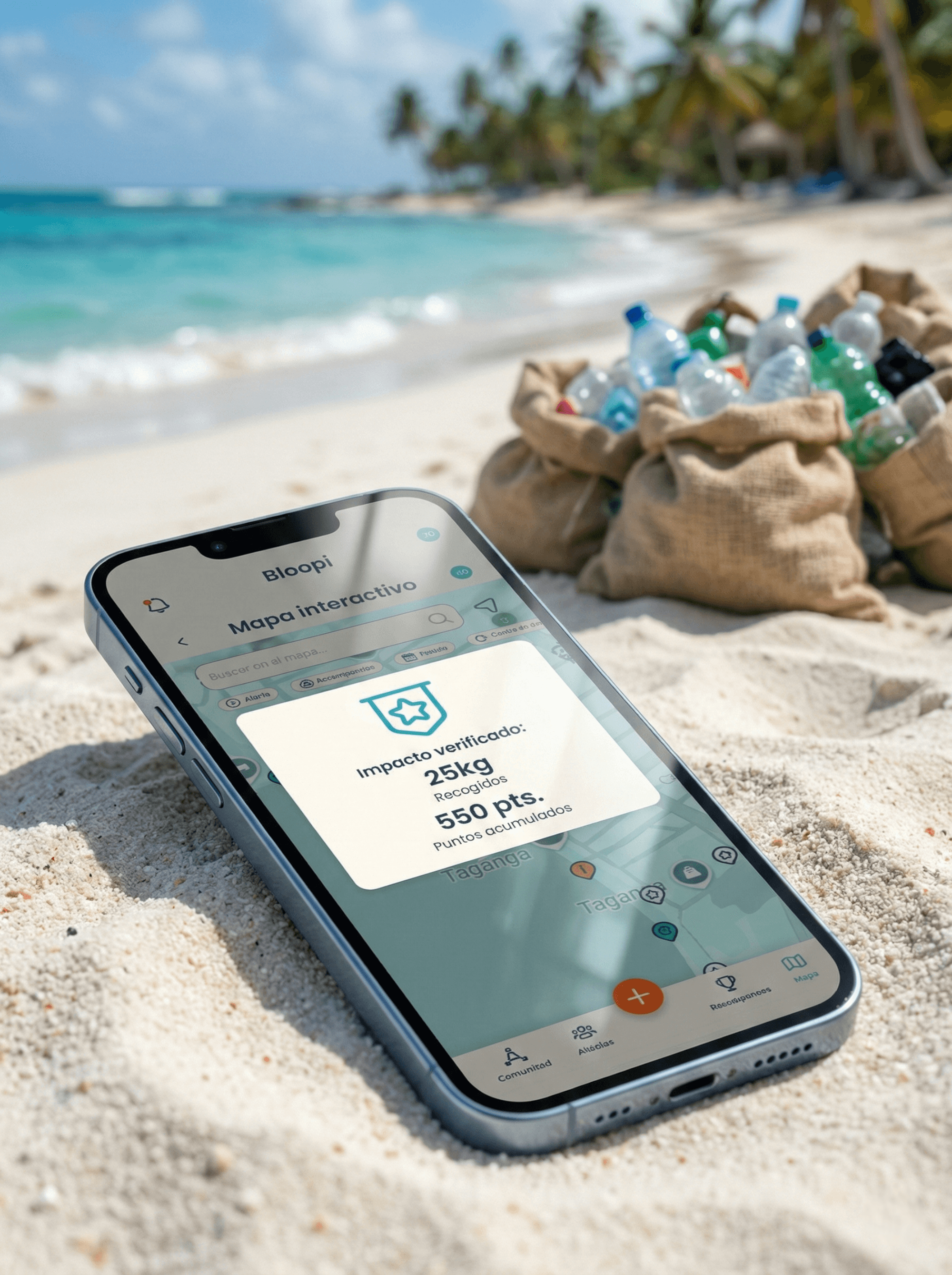
Gamifying real-world impact. We instantly transform kilograms of collected waste into 'Eco-Points', providing immediate gratification to close the user's habit loop.
The Impact Ledger
The more the user logs, the more valuable their profile becomes. This accumulated traceability increases personal investment and drives long-term retention.
The Interface: High-Fidelity Execution
Clean, accessible, and gamified.
The final UI brings the architecture to life, balancing emotional rewards (badges and points) with functional, field-ready tools (interactive mapping).
Product Roadmap: From prototype to reality
Bloopi is a living ecosystem.
I am currently spearheading its real-world validation in Santa Marta, executing a strategic 3-stage rollout to ensure both technical scalability and financial viability.
PHASE 1 (in progress)
Validation & Refinement
Goal: Mitigate usability and business risks.
UX Iteration: Refining core flows based on qualitative feedback from beta testers.
Stakeholder Alignment: Validating the incentive model with NGOs and local businesses.
Design System: Polishing component libraries to optimize the developer hand-off.
PHASE 2
Funding & Development
Goal: Building the MVP.
Fundraising: Active pitching for seed capital (GreenTech funds) to cover operational runways.
Team Building: Recruiting the core technical squad (Full-Stack Devs).
Architecture: Defining the backend infrastructure to support real-time data ingestion.
PHASE 3
Pilot & Go-to-Market
Goal: Controlled launch & initial traction.
Alpha Deployment: Launching the pilot on selected high-impact beaches.
Partnerships: Activating the first network of commercial partners for reward redemption.
Growth Metrics: Monitoring Retention KPIs and waste volume to iterate before national expansion.
Ver documentación técnica
Ver prototipo
Next project
A B2B Management Dashboard designed to centralize logistics, validate field attendance, and certify the environmental impact of large-scale organizations.